
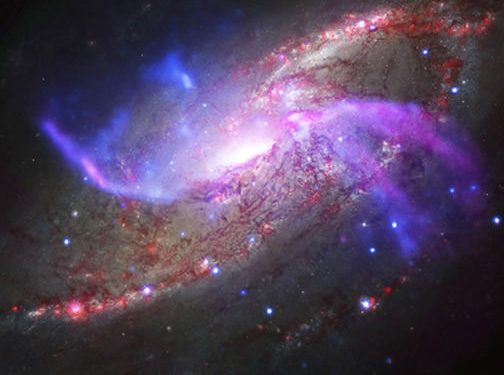

From earliest eras human life involves stars, planets, atmospheres, water, plants, animals and all evolving species. We know from geology and deep archaeology at Kada Gona site Hadar in the Ethiopian Afar that upright walking and tools use develop 3.5 million years BCE. Emergence across Northern India into China and Southeast Asia 2 million years BCE provides early human groups with a sense of the physical world. Bhimbetka rock shelters Madhya Pradesh India 700, 000 BCE show activity marks which may track moon, planets and stars.

Bhimbetka rock shelters Madhya Pradesh India 700,000 BCE
From the earliest cities of the Near East Eridu and Jericho 10,000 BCE earth mound rock raise construction human efforts demonstrate physical skills of initial architecture and engineering. With this civic progress and trade networks comes experience of the night sky stars for guidance over the earth and for human events. Ancient Egyptian awareness of Sirius movement excites curiosity in astronomy. Temple and pyramids civil construction engineering with megalith masses up high enlivens ancient world physical science to dynamical operations with the universe.

Pyramids aligned with starsFor the materialist natural philosophers of Mediterranean Hellas the movements of matter make up the world. African Arabian scholars extensive activity provides knowledge of constellations for trade networks navigation. So that in renaissance Europe a dynamic cosmography opens physical enquiry to how the masses and motions of sense experience come to make the world. That the dynamics of all matter in the universe is needed for true comprehension of events is the real accomplishment of enlightenment physical science.

Planets, moons and comets motions as dynamical interactions of all matter and mass
Pulses of energy are experimentally discovered to be fundamental physical processes as quanta realities. With the Rutherford and Bohr atomic nucleus and electron orbitals progress in fundamental experimental physics continues to clarify the basic processes of matter. With quanta confirmed as essential realities the nature of the elementary particles is open for inquiry. In the 21st century the quantum energies of quarks, electrons, protons and neutrons are available for experimental research to elucidate the energies functions of the universe.
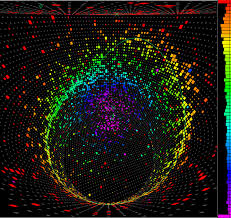
Super Kamiokande detection opens up experimental research into neutrinos masses