What we discover in the world comes from our actions. If we want to know more we need to extend the reach of what we are doing. Our knowledge of the material surroundings develops with physics based on experience. Archimedes knew from the water displaced by his own body how to measure the volume and density of Hiero of Syracuse’s crown.
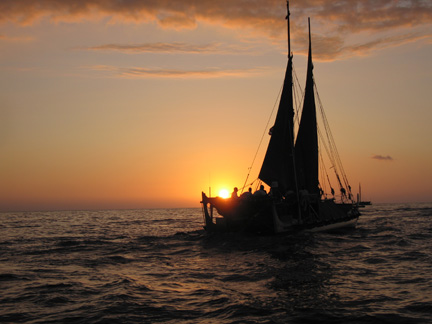
If we continue with practical knowledge of the physical world the masses used as weights to balance goods in trade transactions by ancient Near Eastern civilisations come in to properly found a science comprehending movement and dynamics in mechanical operations of Egypt and Babylonia. So much is accomplished in the foundations of physical science building the ceremonial edifices to reach the sky stars and with this human capabilities are stretched to accomplish more towards what is out there. The African Indian Ocean channels precious materials and astronomical techniques from China, India and Mesopotamia to develop these early civilisations as human achievements with guidance from what known of earth,moon, planets and stars. Mediterranean cultures make their own contributions to natural science through far reaching sea voyages and free ranging physiological and psychological quests to extend the boundaries of practical knowledge.

In Central America as well as African Arabia progress continues with human experiences pushing new limits of inner and outer worlds. The Maya are centrally concerned to live with all senses open to what is possible in the natural world using a pictographic script to denote the physical effect of material exchanges of trade. Early cultures across the world are in communication through sea routes with human efforts motivated by commercial material accumulation building experience and knowledge of wider world physical processes. Human physical accomplishments by 1000 CE delineate a fabric of maps, charts and cosmographies providing practical, technical specifications for early material physical science.
With human energies directed into worldwide commercial transactions it becomes possible during the renaissance to make a physical science from a moving earth and the experimental motions of Galileo that represents the knowledge of human masses flung in extensive dynamic. The universal gravitation identified by Newton proposes physical processes of all matter to be involved in movements of earth and planets. With this recognition of the extensive dynamics we are involved in early European physical science initiates a comprehension of what is really happening. In the 20th and 21st centuries elementary particle interaction experiments and observational gravitational astronomy achieve comprehension with functions of all energies interchanges of the universe.